
Product
b4 is the AmdoSoft platform for automating business and IT processes, all on one technology.
Robotic Process Automation
What is Robotic Process Automation?
Robotic Process Automation (RPA) is a software technology based on the motion of metaphorical software robots (bots) that partially or fully automate human activities that are manual, rule-based and repetitive.
RPA Bots work by replicating the actions of an actual human interacting with one or more software applications to perform high-volume, repeatable tasks including queries, calculations and maintenance of records and transactions.

What sets RPA apart from other automation tools?
One of the key benefits of robotic process automation is that the tools do not alter existing systems or infrastructure. Many other process automation tools interact with systems using application programming interfaces (APIs), which means writing code and can lead to concerns about quality assurance, maintaining that code, and responding to changes in the underlying applications.

How does RPA work?
RPA robots, like our b4 Bots, simply simulate human activities on familiar user interfaces.
They log into applications, move files and folders, copy and paste data, fill in forms, extract structured and semi-structured data from documents and much more.
Business and administrative processes are thus processed fully automatically.

Which processes can be optimized with RPA?
Our main goal is for our RPA-software not only to run reliably and smoothly, but also flexible enough to be prepared for a wide range of applications.
Ordering procedures
All manufacturing industries – whether traditional or digital – work with one or more in any way several order processes. Often, however, customer orders do not arrive via standardized forms, but quite differently in the company – by fax, by e-mail, by online form or via messenger systems. Typically, an employee must then transfer these inconsistent orders so that they can be processed in the existing system. This costs time and manpower, which would be better used elsewhere. An RPA system like the b4 Virtual Client can do this job.
Human Resources & Payroll
Common and repetitive HR and payroll processes can be automated. Instead of burdening employees with the same processes, RPA Bots can take on these tasks and operate payroll accounting quickly, efficiently and with much lower error rates, change master data and transfer it to other systems and of course transfer current tax changes to the system.
Forms & Data Transfer
In almost every company there are standardized Back-office processes that keep repeating and yet again and again have to be completed by employees. Especially with companies that have many end customers, the amount of data and the number of processes are increasing. As a rule, the individual processes are almost always formally identical or at least similar. A software robot can process these processes much faster, without a break and absolutely error-free.
Customer Service
Direct communication with customers is an extremely important, but often also delicate matter. Alone due to the mass of inquiries, many companies are hardly able to manually process everything in an acceptable time. The consequences are dissatisfaction and poor ratings due to delayed or inappropriate responses. Automated software can help process, filter and often even answer customer inquiries with standardized outputs.
Website Testing
eCommerce companies are completely dependent on the functionality of their web pages. Every hour that the product catalog is not displayed correctly, the shopping cart is not working or the page is building up too slowly means losing revenue. Nevertheless, it is practically impossible to extensively and permanently test the functionality of a page manually. A software robot such as the b4 Bot can test the functionality of a website at very low intervals, measure and evaluate results and identify possible error and conflict potentials before they become a significant sales problem.
The b4 Bot
Your virtual colleague from AmdoSoft
The b4 Bot is an innovative solution from AmdoSoft allowing a fully automatic handling of your processes. It works with all Software platforms without changes on existing IT infrastructure.

What is Robotic Process Automation (RPA)?
RPA is a software technology in which software robots (bots) partially or fully automate manual, rule-based and repetitive human activities. The bots replicate the actions of a person working in one or more applications to perform high-volume, repeatable tasks such as queries, calculations and the maintenance of records and transactions.
What sets RPA apart from other automation tools?
RPA tools do not change existing systems or infrastructure. Many other automation tools connect to systems through APIs, which means writing code, maintaining it and reacting to changes in the underlying applications. RPA bots work on the existing user interfaces instead.
How does RPA work?
RPA robots, like our b4 Bots, simulate human activities on familiar user interfaces. They log into applications, move files and folders, copy and paste data, fill in forms and extract structured and semi-structured data from documents, so business and administrative processes run fully automatically.
Which processes can be optimized with RPA?
Typical examples are ordering procedures, human resources and payroll, forms and data transfer, and customer service. Processes that are clearly defined, well documented, repeatable without many changes and rules-based are particularly well suited.
How can I see b4 in action?
Book a personal b4 webinar. Select a topic, register for free and get your questions answered by our team.
Artificial Intelligence
b4 Bots in the sense of RPA automates deterministic, repetitive processes involving structured data.
But what about processes involving unstructured data, including images, PDFs, e-mails, Word documents and more?
Intelligent Process Automation (IPA)
IPA is the collection of technologies that come together to manage, automate and integrate digital processes.
AmdoSoft/b4 combines robotic process automation (RPA) with artificial intelligence (AI). As a result, our b4 bots are now able to mimic user behavior in more complex processes and redefine themselves in response to their environment or the data to which they are exposed.
The b4 Bot can do more than just replace thousands of manual clicks from your employees.

Your benefits of Intelligent Automation with b4
- Increasing process efficiency
- Improving customer experience
- Optimizing back office operations
- Reducing costs as well as risks
- Optimizing the work force productivity
- More effective monitoring and fraud detection

Frequently asked questions about AI with b4
Short answers to common questions. Need more?
Talk to our teamWhat is Intelligent Process Automation (IPA)?
IPA is the collection of technologies that come together to manage, automate and integrate digital processes. AmdoSoft/b4 combines robotic process automation (RPA) with artificial intelligence (AI).
What does AI add to RPA?
Classic RPA bots automate deterministic, repetitive processes involving structured data. With AI, b4 bots can also deal with unstructured data such as images, PDFs, e-mails and Word documents.
What can the b4 Bot do with AI?
The b4 Bot can do more than replace thousands of manual clicks from your employees. It can mimic user behavior in more complex processes and redefine itself in response to its environment or the data to which it is exposed.
What are the benefits of intelligent automation with b4?
Higher process efficiency, a better customer experience, optimized back-office operations, lower costs and risks, better workforce productivity, and more effective monitoring and fraud detection.
How can I see it in practice?
Book a personal b4 webinar and have your questions about intelligent automation answered.
Synthetic Monitoring
Why Synthetic Monitoring?
For a large part, user satisfaction of cloud services and business applications depends on their overall performance and availability. Monitoring application performance end-to-end provides the perspective and experience of the user rather than concentrating upon traditional quality of service metrics such as the network, database, telecoms provider etc.
The b4 Bot is a fully automated „User“ with mouse click and keyboard, which regularly and continuously performs checks on your most critical services. Those measurements take into account all of an application’s technical components from the end user’s workstation right through to the application. In this way, they are representative of the quality of service received by end users.
RPA Potential
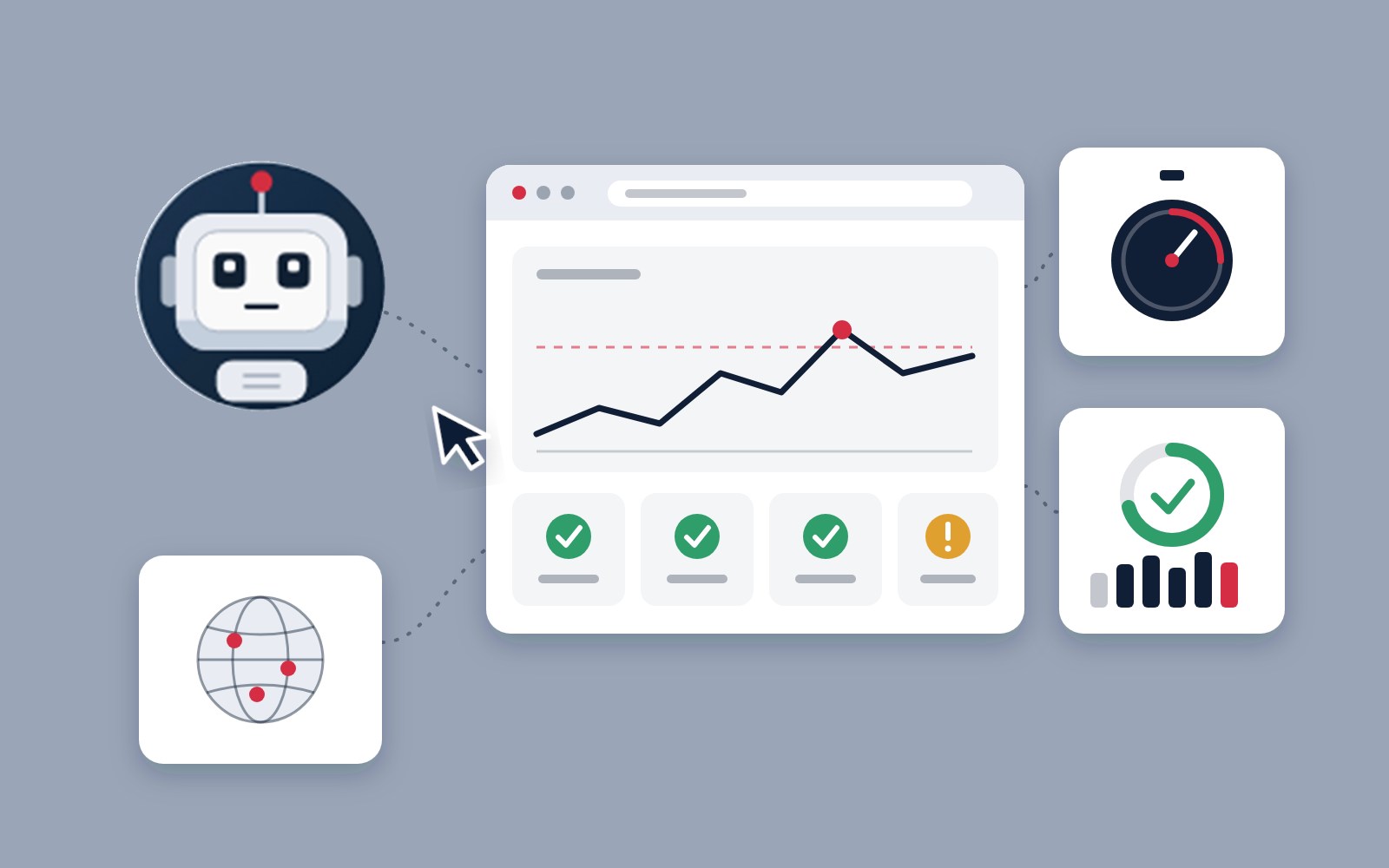
The focus of synthetic monitoring is on the availability and performance of applications from the user’s perspective, something that can not be mastered with traditional network monitoring systems alone. Synthetic monitoring solutions, such as the b4 Bot, simulate and measure real user activities, and report on performance issues before they can become mission-critical.
Synthetic Monitoring as a QM-Tool
Updates and migrations of integrated business applications can be sustainable on the productivity of the entire company. It is therefore advisable to test the application process after such changes before the actual rollout.
Compliance
Binding SLAs define which service quality is to be provided for each application. Synthetic monitoring with b4 delivers reliable, validated key figures for application operation and allows thus to document compliance with all relevant compliance requirements.
E-Shop Optimisation
A company’s ecommerce website has to meet many requirements: user-friendly interface, no vulnerabilities, up-to-date content, and more – A key factor is your own IT: How reliable can business transactions be handled using digital technologies? The operation of the internet platform should be constantly monitored. AmdoSoft sets up a virtual user for its customers, the operator of the ecommerce offering, who does more than just monitor it.
IT Image
Synthetic monitoring helps to demonstrate SLAs and availability of applications and services, and is the perfect technology to detect and proactively address bottlenecks and quality issues.
Advantages
- Avoiding SLA injuries and penalties
- Detecting vulnerabilities along a service chain
- Possibility of proactive initiation of countermeasures
- Increasing end user / customer satisfaction

b4 Synthetic Monitoring
- Monitoring availability and performance of applications / services from a user perspective
- Review from multiple locations
- Support for all common and self-developed applications
- Continuous simulation of complex test steps
- Fast deployment and configuration
- Highly secure facility
- Intelligent notification via e-mail or SMS
- Audit-proof logging and long-term archiving of the data
- Performance, availability and error messages
- Performance trends over day / week / month / year
- Screenshots and logged performance data

How we do this?
We train our b4 Bot to simulate the operation of a real user on the computer. In doing so, he objectively checks and measures the user experience, collects and correlates all relevant data, alerts and informs you in real time.
Errors and their sources are identified more quickly and performance issues can be proactively resolved before becoming business critical.

Your benefit
- Central monitoring
- Management and IT View
- Live view of b4 Bot activities
- Insight into performance and availability of the IT service (not just the IT systems)
- Performance problems are made visible
- KPIs from other systems can be taken into account through interfaces
- Reduction of monitoring costs

Frequently asked questions about Synthetic Monitoring
Short answers to common questions. Need more?
Talk to our teamWhat is synthetic monitoring?
Synthetic monitoring measures the availability and performance of applications from the user’s perspective. A b4 Bot acts as a fully automated user with mouse and keyboard, regularly and continuously checks your most critical services, and reports performance issues before they become mission-critical.
How is it different from traditional monitoring?
Traditional monitoring concentrates on components such as the network, the database or the telecom provider. Synthetic monitoring checks the whole chain from the end user’s workstation through to the application, so the measurements represent the quality of service end users actually receive.
How does b4 Synthetic Monitoring work?
We train a b4 Bot to simulate the operation of a real user on the computer. It objectively checks and measures the user experience, collects and correlates all relevant data, and alerts and informs you in real time.
What are the advantages?
You avoid SLA violations and penalties, detect vulnerabilities along a service chain, can start countermeasures proactively and increase end-user and customer satisfaction.
What can be monitored and how am I informed?
All common and self-developed applications, checked from multiple locations with continuous simulation of complex test steps. Notifications arrive by e-mail or SMS, and data is logged in an audit-proof way with long-term archiving.
IT Automation
Supporting your journey of digital transformation
IT departments under pressure
IT landscapes are subject to constant change, devices and applications are becoming more complex, the control of IT infrastructures, regular updates and troubleshooting take a lot of time. The lack of skilled workers and the increasing dependence on manual processes and customer-specific scripts increase the pressure.
With the automation of IT processes, companies increase their productivity. Automation accelerates business processes, reduces the error rate and ensures more transparency in the company. Employees are freed from routine tasks and can dedicate themselves to higher-value tasks.
What is IT automation?
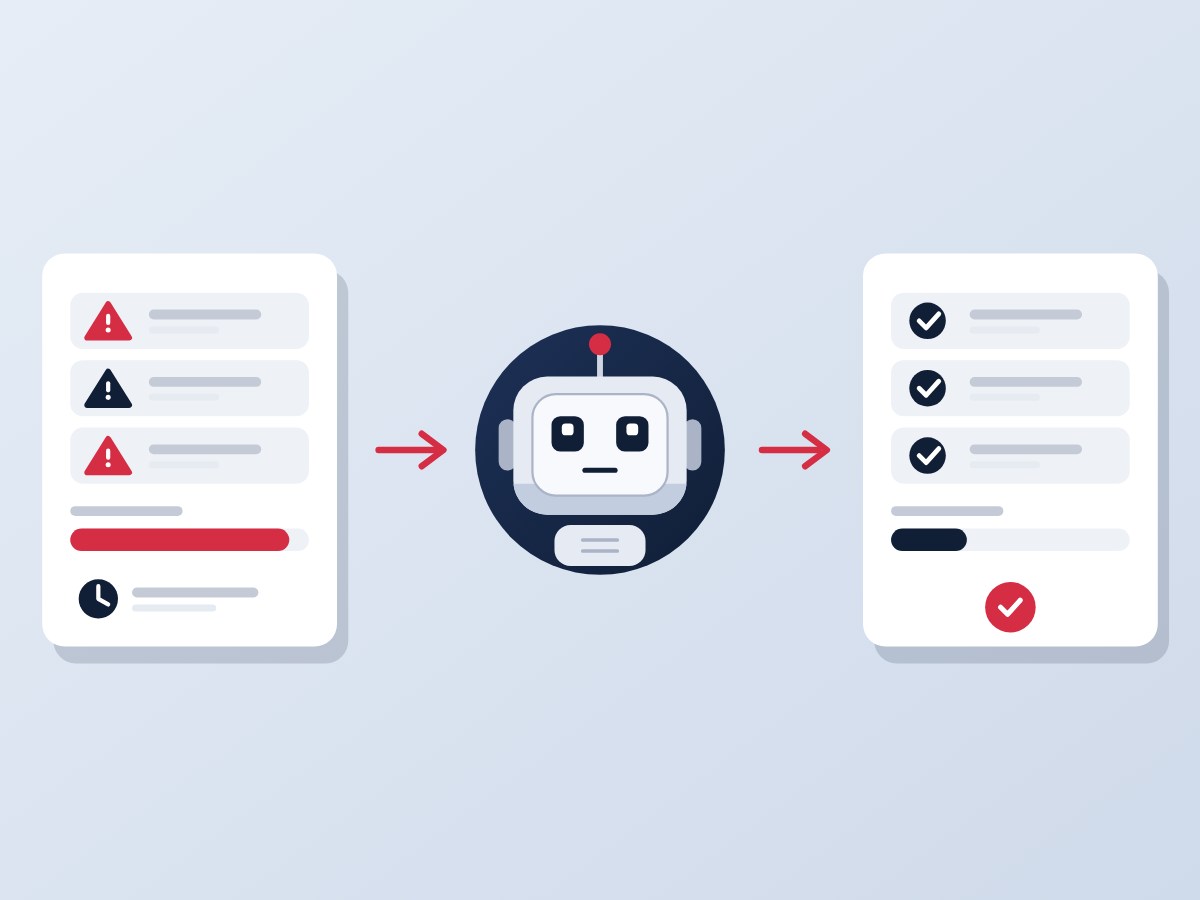
As part of IT automation, software and systems perform automated processes and tasks that replace or reduce human interaction with IT systems.
It helps IT teams deliver services faster, more consistently, and more securely.

Why automate?
The IT processes of digitized business models must function smoothly. Automation increases reliability, availability and scalability, and reduces costs.
The process steps that are handled manually in IT can be influenced by a number of factors that negatively affect the quality of the IT services to be provided: Individual process steps are not executed completely or in the wrong order, delays or transmission errors occur and often process steps, due to time pressure, are not fully documented.

Increase your productivity
Centralize your IT and business processes with a powerful automation platform.
IT Automation with b4
The IT automation software b4 can carry out a multitude of IT tasks and IT processes of different complexity.
For example, b4 can trigger an action (or a sequence of actions) in response to a threshold or a change in IT capacity or IT demand.

Benefits
- Increases productivity
- Reduces processing times
- Relieves employees of lengthy administrative processes
- Reduces operating costs
- Ensures reliable operations
- Ensures high availability and performance

Frequently asked questions about IT Automation
Short answers to common questions. Need more?
Talk to our teamWhat is IT automation?
IT automation means that software and systems perform automated processes and tasks that replace or reduce human interaction with IT systems. It helps IT teams deliver services faster, more consistently and more securely.
Why should I automate IT processes?
Automation increases reliability, availability and scalability and reduces costs. Manually handled steps can be incomplete, in the wrong order, delayed or poorly documented under time pressure; automation avoids this.
What can b4 automate in IT?
b4 can carry out a multitude of IT tasks and IT processes of different complexity. For example, it can trigger an action or a sequence of actions in response to a threshold or a change in IT capacity or IT demand.
What are the benefits of IT automation with b4?
It increases productivity, reduces processing times, relieves employees of lengthy administrative processes, reduces operating costs and ensures reliable operations with high availability and performance.
How can I see it in practice?
Book a personal b4 webinar and get your questions about IT automation answered.
More about b4
READY WHEN YOU ARE